How to Choose a Physical Therapist in Columbia, SC
If you've searched "physical therapy Columbia SC" recently, you already know the problem: there are a lot of options. Big hospital systems. Chain clinics. Independent practices. They all say they'll get you better. They can't all be right.
Choosing the wrong physical therapist doesn't just waste your time and money — it can delay your recovery, mask the real problem, or leave you doing the same exercises month after month without real progress. Choosing the right one can change everything.
Here's what to actually look for — and what to watch out for — when evaluating physical therapy clinics in Columbia, SC.
1. Look for Doctoral-Level Credentials — Not Just a License
Physical therapists are licensed to practice with varying levels of training. The gold standard today is the Doctor of Physical Therapy (DPT) — a clinical doctorate that requires three years of graduate-level education beyond a four-year degree. PTs with DPT credentials have deeper training in movement science, differential diagnosis, and evidence-based treatment.
Some clinics staff licensed PT assistants (PTAs) for the majority of your care, with a supervising PT checking in periodically. That's a very different experience than working one-on-one with a doctoral-level clinician from evaluation through discharge.
When evaluating a clinic, ask: Who will be treating me at every session? What are their credentials?
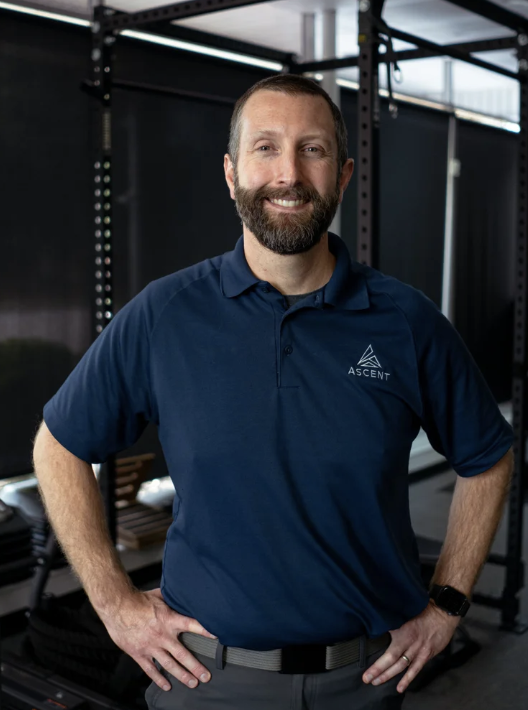
At Ascent Total Performance, every clinician on our team holds a Doctorate of Physical Therapy. You'll never be handed off to an aide or assistant — a DPT is with you from day one.
2. One-on-One Time Is Not Standard — Ask About It Specifically
Many physical therapy clinics operate on a model where your PT juggles three, four, or five patients simultaneously. You do your exercises, a tech checks on you, and your PT catches up with you at the end. It's efficient for the clinic. It's not efficient for your recovery.
One-on-one care means your clinician is present, observing, correcting, and adjusting throughout the entire session. Subtle movement compensations get caught. Your program gets refined in real time. You leave each session having actually been assessed — not just supervised.
This matters more than almost any other factor. Don't assume you'll get individual attention — ask for it explicitly before you book.
3. Find a Clinic That Specializes in What You Actually Need
General physical therapy covers a wide range of conditions. But if you're an athlete returning from a shoulder injury, a runner dealing with chronic knee pain, or a golfer frustrated by a recurring hip issue — you'll get better results with a clinician who has deep experience in your specific area. Ask specific questions about the DPT’s background. What’s their special interest? What continuing education courses have they taken to hone their skills & knowledge?
Look for specialty certifications and specific coursework that match your situation. A few worth knowing:
CSCS (Certified Strength and Conditioning Specialist) — relevant for athletes and performance-focused patients
OCS (Orthopedic Clinical Specialist) - orthopedic conditions specialists
Courses on management of lifting injuries, athletic performance, movement optimization, and holistic treatment.
LSVT - Parkinson’s disease treatment specialists
TPI Medical (Titleist Performance Institute) — for golfers dealing with swing-related injuries
Dry Needling Certification — for chronic muscle tension, trigger points, and pain management
Baseball Rehab Specialization — for overhead athletes managing arm, shoulder, or elbow conditions
A PT with the right specialty background won't just treat your injury — they'll understand the demands your sport or activity places on your body and build your program accordingly.
4. Read the Reviews — But Look Beyond the Star Rating
Five stars are easy to achieve with a handful of motivated patients. What tells you more is the volume of reviews and the specifics inside them.
When reading reviews for a PT clinic, look for:
Patients describing real results — returning to sport, resolving long-standing pain, avoiding surgery
Mentions of the specific PT they worked with — this signals genuine personal connection and care
Reviews from patients with similar conditions to yours
How the clinic responds to any negative feedback — professionalism matters
A clinic with 200+ genuine five-star reviews has earned those reviews across a wide range of patients and conditions. That's a meaningful signal.
5. Choose a PT Who Treats the Root Cause — Not Just the Symptom
The most common complaint we hear from new patients: "I went to PT before and it didn't work." When we dig into why, the answer is almost always the same — the previous clinic treated where the pain was, not why it was there.
Your knee pain might be coming from a hip that isn't doing its job. Your shoulder issue might be rooted in thoracic spine mobility. A skilled physical therapist will evaluate your full movement picture before building a plan — not just hand you a sheet of exercises for the body part that hurts.
At your initial evaluation, pay attention to how much time is spent on your movement assessment versus how quickly they jump to treatment. A thorough clinician will ask detailed questions, watch you move, and explain what they're finding before they touch you. If you feel rushed through your eval, that's a signal.
The right PT gets you better than you were before, not just back to baseline.
The Bottom Line
Choosing a physical therapist in Columbia, SC comes down to credentials, attention, specialization, reputation, and clinical depth. The clinic that checks all five of those boxes — and has the results to prove it — is worth your time and investment.
At Ascent Total Performance, every session is one-on-one with a Doctor of Physical Therapy. No aides. No revolving door. Just expert, individualized care with a single goal: getting you to where you want to be, faster than you thought possible.
📅 Ready to experience the difference? Request your first appointment at achieveatp.com — no referral needed.